
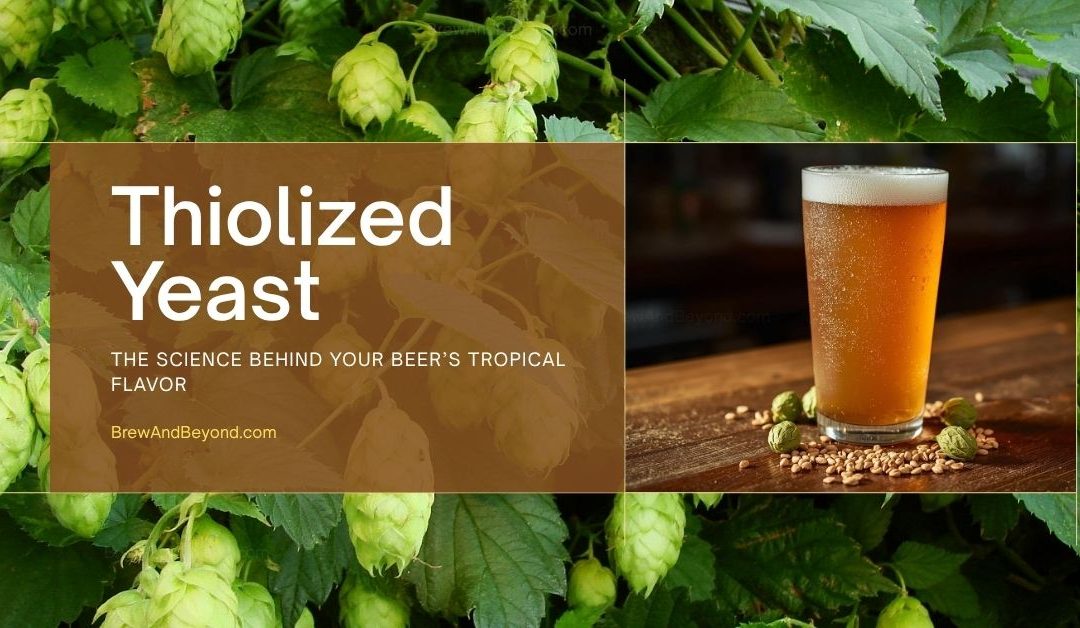
Thiolized Yeast: The Science Behind the Tropical Fruit Bomb in Your Beer
If you’ve cracked open a hazy IPA in the last couple of years and thought, “this tastes like straight-up passion fruit juice,” there’s a good chance thiolized yeast had something to do with it.
Thiolized yeast has become one of the most talked-about developments in modern brewing. It’s changed how brewers think about where tropical flavors come from and, more importantly, how to get more of them into your glass. Whether you’re a homebrewer looking to experiment or just someone who wants to understand what’s happening behind the scenes at your favorite brewery, this guide covers the what, why, and how of thiolized yeast.
What Are Thiols, Anyway?
Thiols are sulfur-containing aromatic compounds. That might sound unpleasant (sulfur doesn’t exactly have a great reputation in beer), but at very low concentrations, certain thiols produce incredibly intense tropical fruit aromas. We’re talking passion fruit, guava, grapefruit, and gooseberry. These are the same compounds responsible for the distinctive tropical punch in New Zealand Sauvignon Blanc wines.
The key detail is that thiols are active at absurdly low concentrations. As Brandon Capps of New Image Brewing has pointed out, thiols register on the aromatic threshold at parts per trillion, making them roughly a thousand times more potent than compounds like diacetyl or dissolved oxygen, which are measured in parts per billion or parts per million.
Thiols exist in two forms:
- Free thiols are already aromatic and volatile. Some well-known hops like Citra, Mosaic, Simcoe, and Nelson Sauvin naturally contain higher levels of free thiols, which is part of why they smell so good.
- Bound thiols (also called precursor thiols) are locked up, conjugated to amino acids like cysteine or glutathione. They have no aroma on their own. They’re abundant in barley malt and hops, but they need an enzyme to break them free.
That’s where the yeast comes in.
How Thiolized Yeast Works
Standard brewing yeast strains do a poor job of converting bound thiol precursors into free, aromatic thiols. The enzyme responsible for this conversion is a beta-lyase called IRC7, and in most traditional ale and lager strains, it’s either inactive or barely functional.
Thiolized yeast strains have been engineered or bred to express higher levels of active beta-lyase enzymes, dramatically increasing the conversion of those locked-up precursors into free thiols during fermentation. Think of it like flipping a switch. The raw materials were always there in your malt and hops. Thiolized yeast simply unlocks what was previously inaccessible.
Omega Yeast, the lab that popularized thiolized yeast for homebrewers and craft breweries alike, used CRISPR/Cas9 gene editing to create their first thiolized strain, Cosmic Punch, released in 2021. They took the IRC7 gene, paired it with a more active promoter, and inserted it into their popular British Ale V strain. The result was a yeast that could convert thiol precursors at levels far above what any conventional brewer’s yeast could manage.
Omega’s research also led them to a second enzyme called PatB, sourced from Staphylococcus hominis, a bacterium that naturally lives on human skin. PatB acts similarly to IRC7 but is more active and more specific in cleaving cysteine-bound thiol precursors. This enzyme became part of their more advanced thiolized strains like Helio Gazer, which boosts thiol output roughly 200 times above sensory threshold.
The Major Players
Omega Yeast (Chicago, IL)
Omega helped popularize thiolized yeast across both the homebrew and pro brewing worlds with their 400-series engineered strains:
- Cosmic Punch (OYL-402): The original. A thiolized version of British Ale V. Versatile and widely used, it delivers noticeable tropical fruit without being overwhelming.
- Helio Gazer (OYL-405): The heavy hitter. A much more thiol-forward version of British Ale V, producing intense guava and Sauvignon Blanc-like aromas.
- Star Party (OYL-404): Built on the clean Chico ale platform (think American ale yeast). Great for a fresh take on West Coast IPAs with added tropical character.
- Lunar Crush (OYL-403): A thiolized version of Mexican Lager, built for hop-forward lagers and Cold IPAs. Crisp and refreshing with grapefruit thiol aromas.
Important note for homebrewers: As of June 2025, Omega discontinued the sale of all 400-series engineered strains in homebrew-sized packs. These strains are now available only to professional breweries. The decision was driven by intellectual property concerns, as competitors were reportedly propagating and reselling Omega’s proprietary strains.

Berkeley Yeast (San Leandro, CA)
Berkeley Yeast was actually the first to bring a high thiol-biotransformation strain to market, patenting and launching their Tropics line in 2020, before Omega released Cosmic Punch. Berkeley took a transgenic approach, incorporating a food-grade carbon-sulfur lyase (CSL) enzyme from a different microbe species and then optimizing its structure through protein engineering to maximize thiol conversion while minimizing off-target sulfur compounds. Their Tropics line includes:
- Tropics London: Their flagship for hazy IPAs. All the juicy, pillowy qualities of a London Ale strain with a serious thiol upgrade.
- Tropics Vermont: Similar thiol expression but more attenuative. Good for both clear and hazy IPAs.
- Chill Tropics: Designed in collaboration with Alvarado Street for Cold IPAs. Clean fermentation with tropical thiols and no diacetyl.
- Dry Tropics London: Delivers the soft mouthfeel of London Ale with layered grapefruit and passionfruit notes.
Berkeley also offers Tropics Boost, a plant-based extract that provides additional thiol precursors to dial up tropical intensity when used alongside their Tropics strains.
Berkeley’s strains are currently oriented toward professional breweries, with pitchable quantities starting at 1 BBL.
Escarpment Labs (Guelph, Ontario)
For homebrewers, Escarpment Labs’ Thiol Libre is one of the most accessible options still on the market. What makes Thiol Libre different is how it was made. Rather than gene editing, Escarpment created it using spore-to-spore mating, combining a kveik strain with a non-diastatic wild yeast strain that naturally has strong thiol release potential. Health Canada issued a Non-Novel Determination for the strain, meaning Canadian regulators consider it a product of conventional breeding rather than genetic modification.
Thiol Libre ferments faster than many other high-biotransformation strains, produces stable haze, and can be repitched for up to 8 generations with consistent results. It works in the 63-73°F (17-23°C) range and displays enhanced guava and passionfruit aromas even with classic hops like Cascade.
Where Do Thiol Precursors Come From?
This is one of the most interesting parts of the story. For a long time, brewers assumed thiols came primarily from hops. But research from both Omega Yeast and Berkeley Yeast has shown that barley malt is actually a rich source of thiol precursors all on its own.
In one of Omega’s trials, they brewed a test batch with 100% two-row malt, no hops at all, and fermented it with Cosmic Punch. The result? Free thiol levels are nearly ten times above the sensory threshold. Berkeley Yeast made a similar discovery, finding that a thiolized strain could make an unhopped neutral ale taste more like fruit juice than beer.
That said, not all ingredients contribute equally:
- Lightly kilned and unkilned base malts (like 2-row and Pilsner) tend to have the highest thiol precursor levels.
- Higher-kilned specialty malts contain less precursor.
- Wheat and oats have little to no thiol precursors, so a 100% barley malt bill will give you more intense thiol expression than a grist loaded with adjuncts.
- Hops vary widely in bound thiol content. Cascade, Saaz, Calypso, Motueka, and Nelson Sauvin are frequently cited as having high levels of bound precursors.
Brewing Tips for Maximizing Thiols
Mash Hopping
This is probably the single most discussed technique in thiol brewing. Adding hops during the mash, rather than the boil or whirlpool, allows the mash enzymes to help break down bound thiol precursors from the hops and combine them with precursors already being extracted from the grain. Omega recommends varieties like Cascade, Saaz, Calypso, and Motueka for mash hopping. For a deeper dive into the process, Omega’s best practices guide for brewing with Thiolized yeast is worth a read.
For homebrewers, the sweet spot is roughly 0.4-0.5 oz per gallon in the mash.
One surprising finding from Omega’s research: adding hops in the whirlpool actually resulted in about 40% fewer thiols than a non-hopped control. So the timing of your hop additions matters quite a bit when you’re chasing thiols.
Phantasm Powder
Phantasm is a dried Sauvignon Blanc grape pomace product from New Zealand that’s loaded with cysteine-bound 3MH thiol precursors. When added during the whirlpool or early fermentation and combined with a thiol-active yeast, it can push free thiol levels dramatically higher.
Pro brewers like those at New Image Brewing found that adding Phantasm in the whirlpool (rather than mid-fermentation) gave the best results, producing more tropical character and less of the grape-like notes that higher doses tend to emphasize.
Keep Your Grain Bill Simple
If you want thiols to really shine, Omega and other sources recommend paring your recipe down. A blonde ale or pale ale with a straightforward barley-based grain bill will showcase thiol character much more clearly than a heavily hopped, heavily adjuncted NEIPA, where those aromas get buried under layers of other flavors.
Go Easy on the Dry Hops
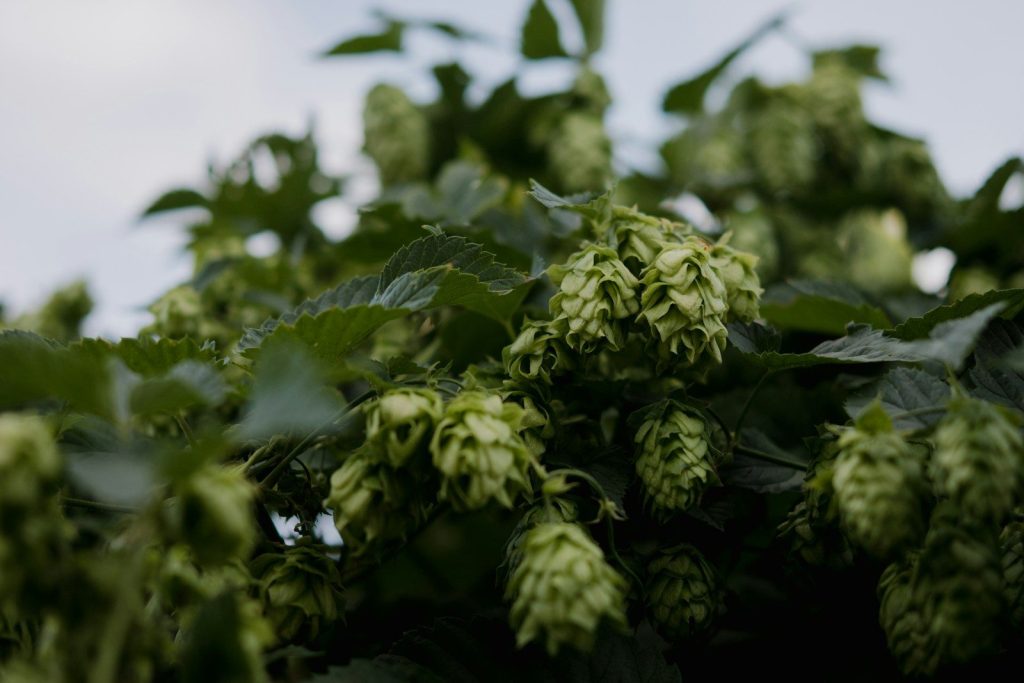
This might sound counterintuitive, but heavy dry hopping can actually compete with and overpower thiol aromas. Pulling back a bit on your dry hop rate can let the thiols come through as the dominant tropical note. Some brewers have found that this lets them use fewer hops overall while still getting intense fruit character, which is a nice cost savings too.
Blending Yeast Strains
Not sure if you want full-blast thiol intensity? You can blend thiolized yeast with its non-thiolized parent strain. A 50/50 blend will give you roughly half the thiol output. A 25/75 blend (thiolized to non-thiolized) gives about a quarter. This lets you dial in exactly the level of tropical character you’re after.
What About Homebrewers Now?
With Omega’s 400-series strains off the table for home-scale purchases, homebrewers still have options:
- Escarpment Labs Thiol Libre remains available in homebrew packs through various online retailers. It’s non-GMO and delivers solid thiol biotransformation.
- High-thiol hop varieties can push tropical character even without a thiolized strain. Newer varieties like NY Cascade 023 and Alora are bred specifically for elevated thiol precursor content.
- Phantasm Powder works with any yeast that has some beta-lyase activity, not just engineered strains. Combining it with a conventional strain won’t give you the same intensity as a thiolized strain, but it can still nudge your beer in a more tropical direction.
- Mash hopping with precursor-rich varieties is a technique any brewer can use regardless of yeast choice.
- Some homebrewers have reported building up stocks of Omega strains before the discontinuation and repitching from saved slurry, though this has a limited runway depending on yeast health and generation count.
Is Thiolized Yeast Worth It?
Opinions vary. Some brewers swear by it and have built flagship brands around thiolized strains. Others feel the effect is subtle at the homebrew scale, or that the tropical character can clash with certain hop profiles. A few homebrewers on forums have noted that the results can be inconsistent or that heavy-handed use produces odd flavors.
The honest answer is: try it and decide for yourself. Professional brewers at places like Alvarado Street have found that thiolized strains let them create massively tropical IPAs with significantly less hops, saving money while producing more consistent results. At the homebrew level, the experience tends to be more variable, but that’s part of the fun.
For a side-by-side look at how different strains stack up in practice, check out this brewer comparison of the most tropical yeast strains for hazy IPAs, which includes feedback on Cosmic Punch alongside other popular options. If you’re going to experiment, start simple. Brew a basic pale ale or blonde with a clean barley grain bill, mash hop with Cascade, use a thiol-active yeast, and see what you get. That will give you the clearest picture of what thiols actually taste like before you start layering them into more complex recipes.
The Bottom Line
Thiolized yeast represents a genuine shift in how brewers can approach tropical flavor. Rather than relying solely on expensive hop additions, these strains tap into a huge reservoir of flavor potential that was always sitting in your grain and hops but couldn’t be accessed with traditional yeast. The science is solid, the commercial adoption is real, and the flavors speak for themselves.
The category is still evolving. Berkeley Yeast continues to refine their Tropics line and develop new tools like Tropics Boost. Escarpment Labs offers a non-GMO alternative. New hop varieties are being bred specifically for high thiol precursor content. And as more data comes in from both pro and home brewers, the best practices for using these tools will only get sharper.
It’s a good time to be brewing beer.
© 2026 BrewAndBeyond.com. All rights reserved. No part of this publication may be reproduced, stored in a retrieval system, or transmitted in any form or by any means without the prior written consent of the copyright owner.
Author: Dean
The Brewer's Corner - The place where I answer your homebrew questions (Beer, cider, wine, mead.....). Nothing is too crazy. You can reach me at TheBrewersCorner@proton.me